Who Are You?

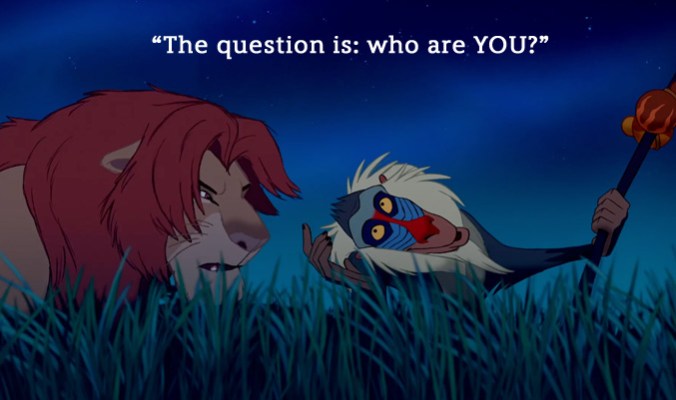
RafikiWhoAreYouOK. Obviously, I could not resist. Disney films have a way of being so profound and yet so simple. Primple? Or simfound? I guess I won’t try to coin any new terms today. But have you ever really, thoroughly considered this question: Who are you?

Reflection is a tool that allows you to continually mold and shape your response to this question. Although not always done formally or in writing, reflection has played a large part in many aspects of my life: academic, personal/familial, and professionally. That is precisely why I feel that there is SO MUCH to learn and SO LITTLE time!

If you have not yet begun to engage in self-reflection or do not do so on a regular basis, I hope this post provides you with the impetus for doing so immediately!

As you continue your professional path, begin a new school year, or seek to implement a new idea, consider these questions (Collaborative Leadership: Six influences that matter most):

  • Who are you?
  • What are your aspirations and values?
  • Who do you want to be to the educational field?
  • What do you know and what can you teach that is different from the masses?
  • How will your voice speak to a need in the field?
  • What will you do if you have hesitations about standing out and being yourself?
  • How will you know you are ready?

We cannot teach or lead others until we fully understand ourselves and our purpose. Reflect on these questions. It is okay (even preferable) if your responses change over time. This change is what will help you to lead effectively and positively impact your school community. Find your voice. And then… ROAR!!!

“You’re Contagious!”

Recently, I began my journey as an instructional coach for the exceptional student education (ESE) department in my school district. ESE, no matter where you go, seems to have a bit of a bad reputation. Students with disabilities are seen as “weird’ and most personnel in this department get very little say when it comes to the business of teaching and learning. As I began my work in this department, this perception became even more clear. Very few teachers wanted to collaborate with the ESE coach!

Fast-forward to the end of the school year. My team and I are preparing a summer  institute regarding supporting students with disabilities in inclusive classrooms. We are feeling beat down, dispirited, and just plain tired from all of the changes, mandates, and buck-passes that have occurred during the year. I am the youngest (and probably the most inexperienced) person on the team. I’m stopping at Starbucks to refuel and quell my anxiety about this meeting. I take a call from a teammate to clue her in on the latest details.

Immediately upon answering my teammate says, “I’m glad I reached you.” We talk for a little while and I express my excitement about the upcoming summer institute and how much fun we will have. To my surprise, my teammate express, “That’s part of why I called, you know? You’re so excited! Your passion is – it’s… contagious!”

After more than a decade in the classroom, I had been quite worried about being an ineffective coach. I knew I was a pretty decent teacher and had been able to motivate my students in ways that many of their teachers had not been able to do before. But great teachers do not always make great instructional leaders.

Hearing this from my teammate (who has TONS more experience and knowledge in our field than I do) really made my day. And reminded me why I chose to pursue educational leadership.

If we are to improve learning for our students, we have to improve learning from our teachers. We always run into teachers who seem to have lost their passion, their drive, or their purpose. Passing along that excitement to those who need refocusing just may be what we need to engage our teachers in discussions and actions to improve learning!

Passion – PASSItON!conatgious light bulbs